
By Morfil Mawr

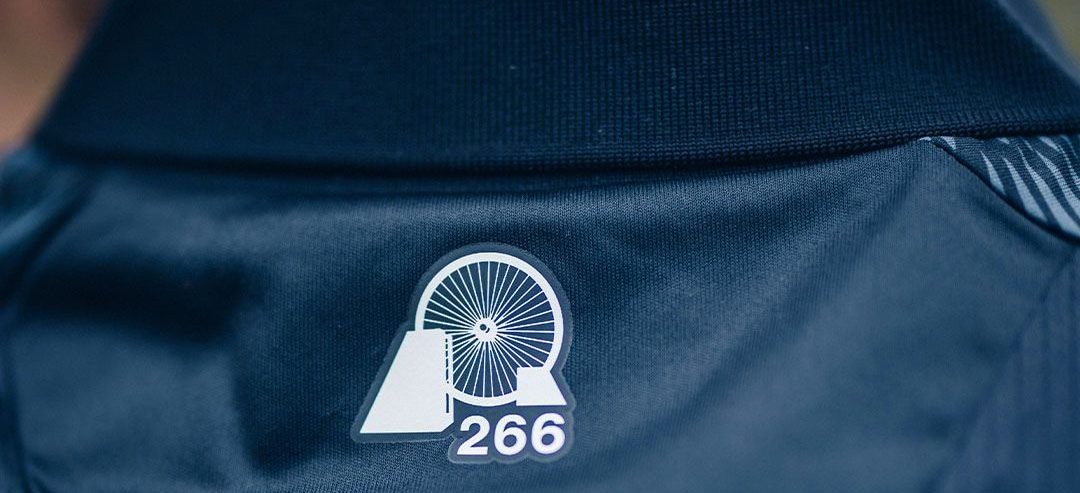
(Source: wrexhamafc.co.uk, 24/25 Away Shirt)
Gresford
It’s a name almost synonymous with tragedy, while not quite as known perhaps as the likes of Aberfan or Tryweryn, it has had a surge of interest recently due to an episode of Welcome to Wrexham, as well as it being the 90th anniversary of the disaster. To most, it’s just a story, a cautionary tale about corporate greed and the dangers of the pit, but to the people of Wrexham, it’s ingrained in our communities, it is stories from our Nains and Taids, it is family members lost, it is the hen Daid that we never got the chance to meet.
Industry
To talk about Gresford we have to go back to the beginning, to look at the men responsible for such a huge amount of industry and such a huge amount of suffering. Born in 1825 mid-way through the Industrial Revolution, at Bodmin in Cornwall, Henry Dennis, a budding young industrialist went from job to job going from Borough Surveyor of Bodmin, to engineer on the Cornish Railway. He then went on to spend some time in Spain working in constructing railways where he was brought into contact with the mining industry. Upon his return, he was entrusted by the mining firm John Taylor and Sons with the construction of tramways from Llangollen slate quarries to the Shropshire Union Canal. It was in this part of the world, northeast Wales, Henry Dennis would find most of his success.
Having worked on the tramways Dennis quickly moved into a more direct role in the mining industry, finding his way into a managerial role taking charge of the Bryn-yr-owen Colliery, near Rhosllannerchrugog. This pattern continued for nearly a half century managing Wrexham and Acton collieries, the Ruabon Coal and Coke Company; becoming director of the Minera Lead Mining Company and so on. By this point the notorious industrialist Dennis served for a time as President of the Mining Institute of Great Britain.
While he was managing director of the Hafod Colliery, in Ruabon, high-quality Etruria Marl clay was discovered. This led him to establish the Hafod Brickworks later Dennis Ruabon Brickworks. This factory produced the famous Ruabon redbrick embedding this industry into the local culture and earning Ruabon the nickname Terracottapolis. Ruabon redbrick was used across the UK to build hospitals, universities including part of Liverpool University, schools, courts, pubs and other buildings like the Pierhead building in Cardiff Bay.
It is needless to say the ramifications of Henry Dennis’ actions on northeast Wales are immeasurable, at his height his ventures employed up to 10,000 people, and one of the most successful was his time as chairman of the Westminster Brymbo Coal and Coke Company which established coal mining as a major industry in the area surrounding Wrexham and Gresford. The life and career of Henry Dennis paints a picture of thriving industrial success but his entrepreneurship and drive hid the truth that was beneath the surface all along a truth that would be brought kicking and screaming into the light under his son Henry Dyke Dennis.
In 1908, two years after the death of Henry Dennis, the then (after several closures and mergers) United Westminster and Wrexham Collieries began to sink a pit at Gresford this occurred just a few years before the 1911 Coal Mines Act; this meant it was built to outdated safety standards. By the year 1934, 2,200 people were employed at the colliery, which comprised 2 shafts; the Martin, named after Sir Theodore Martin; and the Dennis, named after Mabel Dennis who was the wife of the company chairman Henry Dyke Dennis.

(Source: dailypost.co.uk, Moments that shocked North Wales: Gresford Colliery disaster)
Tragedy
At this time in the mid 1930’s the facade of progress built by Henry Dennis had been thoroughly eroded. It was right in the middle of the Great Depression, many mines had closed in the northeast and an influx of miners found themselves working at the Gresford pit. This introduces us to another person, William Bonsall, the pit manager at Gresford.
At 10pm on the 21st of September 1934, the Friday night shift began at the colliery with over 250 men making their way into the pit. At around 2am on the 22nd of September, while the community slept, death descended on the village of Gresford. A violent explosion tore through the Dennis shaft, only 6 men from the ‘Dennis’ emerged alive scrambling up a ventilation shaft. Subsequent explosions took more lives and during the rescue attempt, 3 men of the rescue brigades died due to the levels of poisonous gas. The final victim was Fredrick Strange, aged 22, who collapsed at a Memorial Service later dying as a result of shock potentially from his brother’s death. The disaster stole the lives of 266 men and boys aged 16-69. They were not martyrs they didn’t die for a cause, they were ordinary husbands, sons, friends and brothers who died needlessly, their lives were of little value to the callous owners and managers but their loss was devastating to the communities they were part of. Only 11 bodies were ever recovered and the rest lie entombed beneath the ground to this day. Many of those who died were doing double shifts for a day off to watch the game between Wrexham and Tranmere Rovers.
The night of the disaster was payday, and the payslips given to the workers burned with them and remained buried. When the widowed families inquired about the pay, some reported that they were told to go dig for it. When it came time to give the families their final pay, the men were docked 4 hours because they died before the end of their shifts. Later the families of the workers received letters saying they were no longer employed by the company and therefore had to vacate their houses which the company owned.
No cause for the disaster was ever conclusively agreed on, but at the official inquiry William Bonsall was found to have told surveyors to not only stop taking ventilation records, but after the disaster, he also falsified some of them.
Few miners gave evidence at the enquiry, likely fearful of losing their jobs, but the few that did painted a picture of completely unsafe working conditions, conditions that were particularly hot and gassy with poor ventilation, conditions which likely led to the explosion.
None of the mine owners at the company were ever convicted, they weren’t even called to speak at the inquiry despite the fact it was often said that the Gresford pit was not run by the manager Bonsall, but by the owners, particularly Henry Dyke Dennis who blatantly pressured Bonsall to cut corners in the name of commerce and profits over safety. This was further highlighted by the fact that the agent at Gresford, a role meant to be filled by someone with the expertise to stand up to the managers and the owners, was filled by J.A. Harrop who was also the company secretary.
Despite the inquiry finding masses of evidence of corner cutting and neglect, the only conviction that resulted from the disaster was against William Bonsall for inadequate record-keeping, for which Bonsall was fined £150.
266 men and boys did not have to die but to William Bonsall, Henry Dyke Dennis, and the rest of the bosses their lives were cheap. The explosion may have killed the miners, but it was capitalist greed that made it inevitable. Their lives were used to feed the factories, the weapons and the engines of a dying empire.

(Source: wrexham.com, Annual Service of Remembrance For The Gresford Mining Disaster)
Legacy
The Gresford Colliery closed finally in 1973 for economic reasons. Today the memory of Gresford lives on through memorials; a wheel from the pit winding gear (pictured above) was erected in 1982 near to where the disaster took place. Other memorials include a mural in the All Saints Church in Gresford, and a wall in the Old Miners’ Rescue depicting the names and ages of all those who lost their lives.
Wrexham AFC uniforms also commemorate the disaster with ‘266’ and a depiction of the memorial wheel on their backs. During season 2 of the Disney+ show Welcome to Wrexham, we also see plans for the erection of another memorial which may be part of the redevelopment of the kop stand by the club’s Hollywood owners.
Arguably the most important way the memory is kept alive is stories passed down through parents and grandparents keeping the memory grounded in more than just pictures and memorials.
With every passing year, the memory of these men and boys fades. In 2020 the last man working at Gresford at the time of the disaster died, and that first-person link to the tragedy died with him.
However, as the memory of this tragedy continues its slow fade into history, their legacy will live on through groups like the Wrexham Miners’ Project who through the gradual restoration of the former North East Wales Miners’ Rescue are “saving history, building community”. Today the space that barely survived attempts by the previous owner to illegally tear it down, is used as a museum to the workers who lost their lives at Gresford, including the rescuers who came from that very station. As well as serving as space for community art and a cafe and is well worth a visit if you find yourself in Wrexham. It is a shining example of the power of community overcoming adversity in the face of capitalism and State/Government neglect.
The feeling of injustice and wasted life still lingers in these communities. We have toiled long and hard for the whims of capitalism, and yet what have we to show for it? Gresford represents to the people of Wrexham the horror of everyday life. That day in 1934, 266 men and boys lost their lives and every day since, the people of Wrexham have been continually exploited and used; every time a worker is paid a slave wage for hours of labour, every time a child goes without food, every time a family endures the cold, and until that exploitation is ended, our communities cannot heal. The Gresford Disaster is the festering wound that reminds us that under this system our lives are disposable, worth only the labour we can provide.
The people of Wrexham, Gresford and the surrounding area can no longer look for justice for the 266 men and boys. Henry Dennis, William Bonsall and Henry Dyke Dennis are long dead. These communities simply want time to heal and grieve and remember all we have lost and all that has been stolen from us.
Cofiwch Gresffordd.
To end, a poem by E.A.J. Garth School House, Wrexham:
The Men of Gresford
Deep down the mine, three thousand feet,
In suffocating dark they died;
Above, the air stretched cool and sweet
League upon league – to them, denied
No light illuminated their dark night,
No moon, no stars, but scorching breath
Of fearful fires in fearsome flight
Swept them to ravenous death.
Oh! God, whose awful power has hid
The warmth of summer suns in coal,
And man must delve and toil amid
Such dangers and let Death take toll.
Look down on them where’er they lie,
Who gave their lives for daily bread,
And then let Thine all-pitying eye
Rest upon us, uncomforted.
And pity us, whose strongest will
Is weak to pay so high a price
For warmth, for livelihood, and still
Stand helpless at the sacrifice!
-E.A.J. Garth School House, Wrexham
 Welsh Underground Network